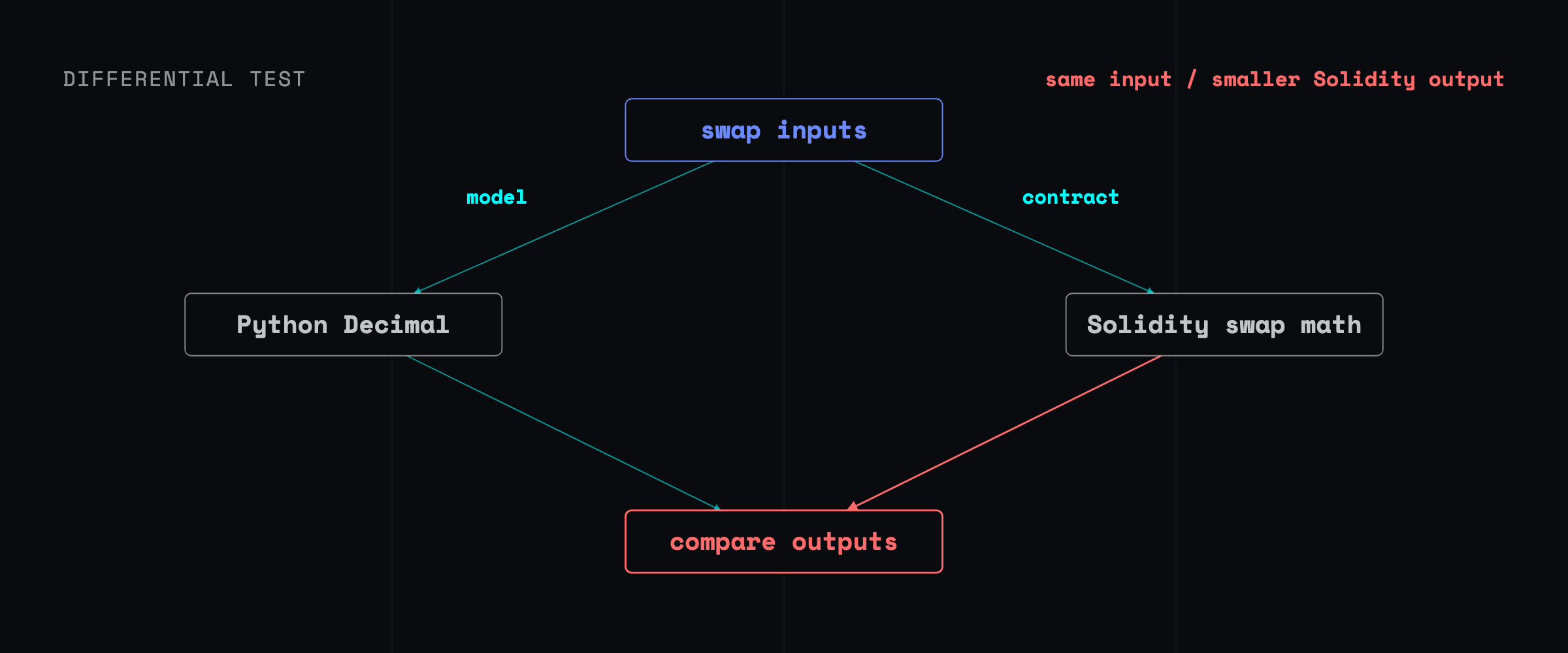
Learn how Balancer’s StableSwap math failed and how differential fuzzing in Python detects precision bugs in DeFi swap logic for safer smart contract design.
Glossary definition
Differential fuzzing sends generated inputs or action sequences through two implementations and flags behavior that diverges unexpectedly.
The comparison target can be a previous protocol version, a simpler reference model, another client, or two code paths expected to implement the same rule. Instead of writing every expected output by hand, the test treats disagreement as the signal to investigate.
Not every difference is a bug. Rounding, ordering, gas behavior, error types, and deliberately changed semantics need normalization or explicit exceptions. The strongest campaigns define which observations must match and preserve the sequence and state that produced a mismatch. See the migrated Balancer incident analysis for a concrete security use.
Used in context
Learn how Balancer’s StableSwap math failed and how differential fuzzing in Python detects precision bugs in DeFi swap logic for safer smart contract design.
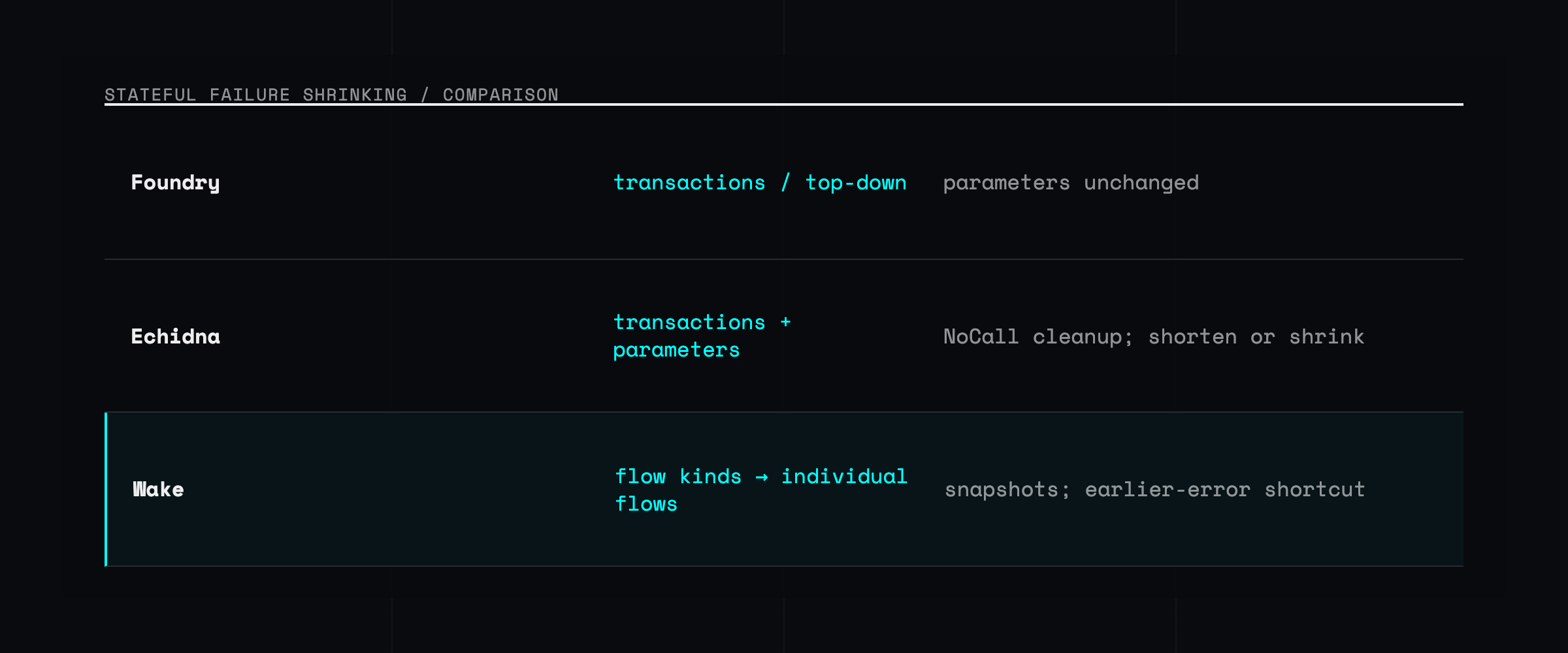
Comparing how Foundry, Echidna, and Wake shrink fuzzing failures. Learn which tool offers the best balance of speed, precision, and debugging clarity.
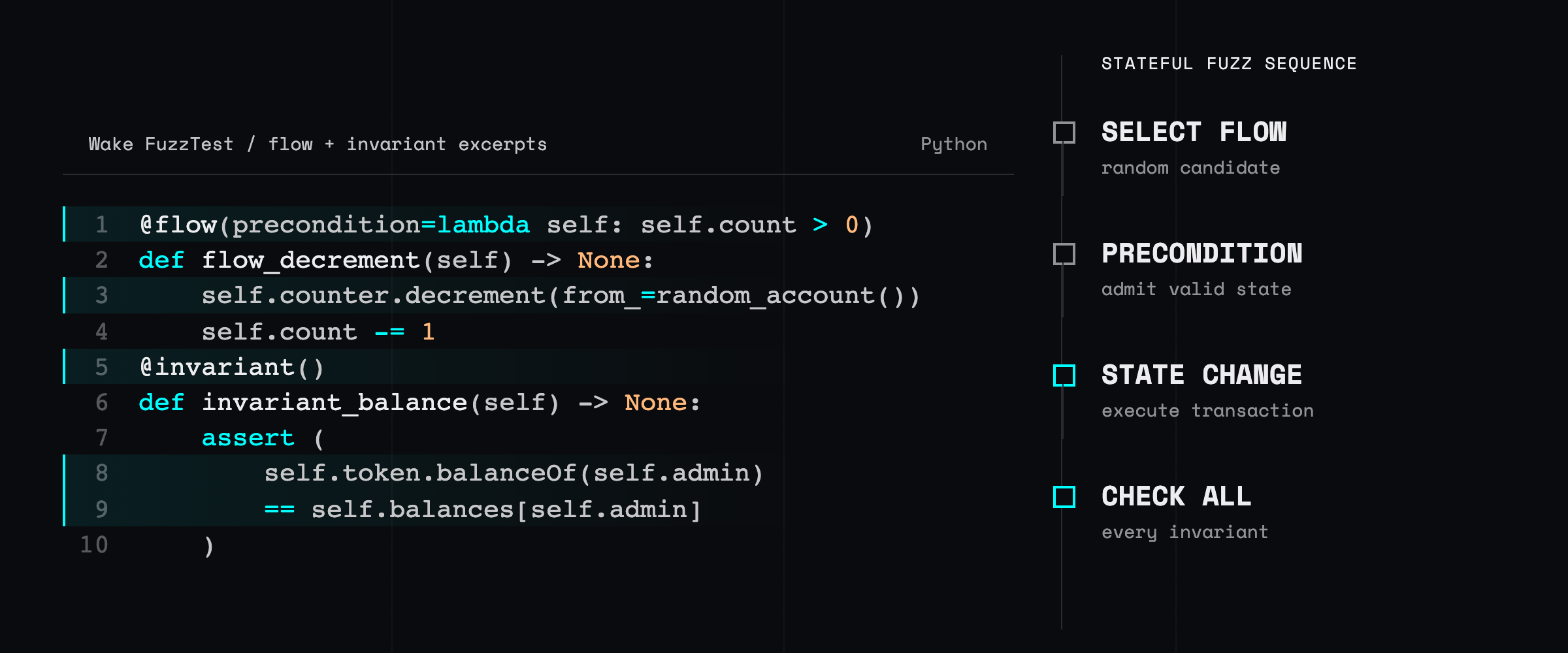
Learn how manually guided fuzzing combines stateful, white-box testing with flows and invariants to test complex smart contracts more efficiently.