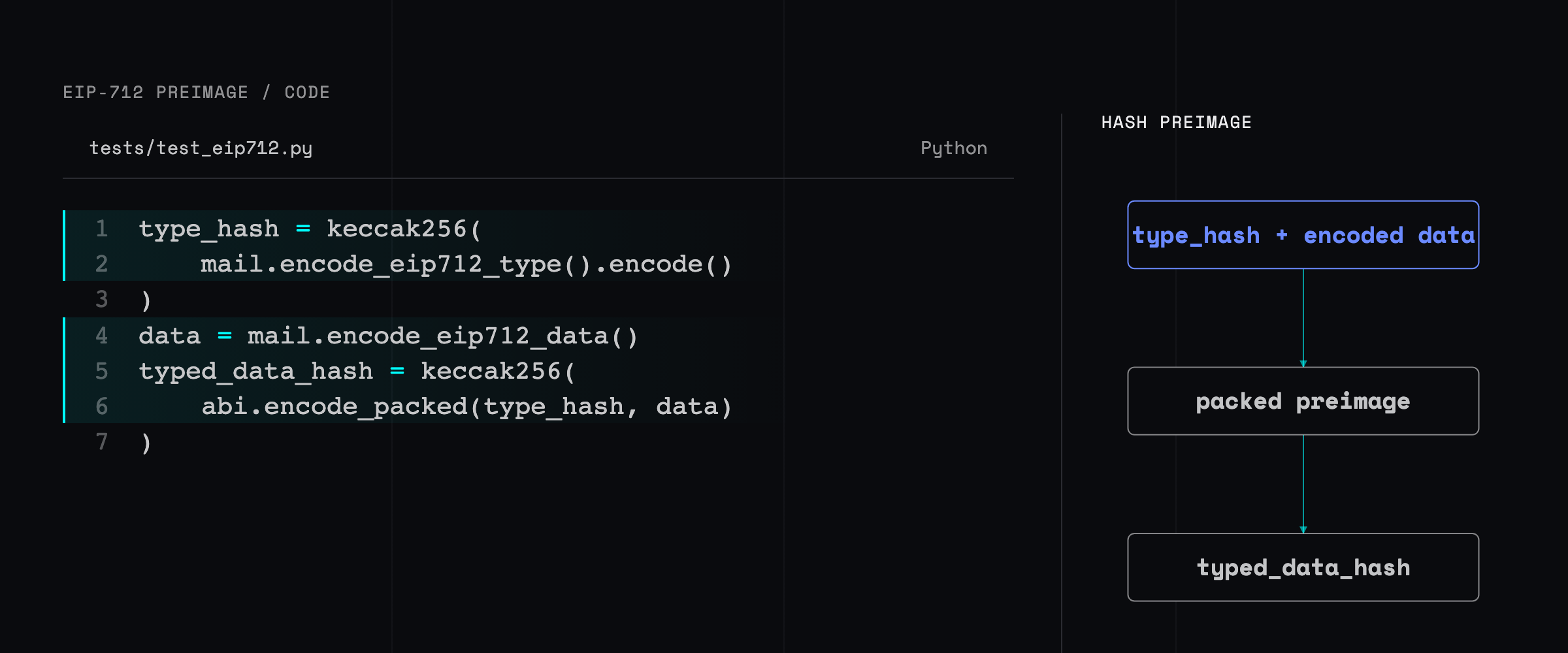
Inspect EIP-712 type strings and preimage bytes in Wake to match Solidity exactly, catch schema errors early, and prove signatures before deployment.
Glossary definition
EIP-712 defines typed structured-data hashing and signing for EVM systems so wallets can present meaningful fields instead of an opaque byte string.
EIP-712 describes how to encode a hierarchy of typed structs and combine it with a domain separator before signing. The domain commonly binds a signature to a name, version, chain, and verifying contract, reducing accidental reuse across applications or deployments.
The standard does not define replay protection by itself. Nonces, deadlines, authorization state, domain design, and the contract’s verification logic still determine whether a signature can be reused or misapplied. The normative encoding rules live in EIP-712; the migrated Wake encoding guide shows how to test concrete values.
Used in context
Inspect EIP-712 type strings and preimage bytes in Wake to match Solidity exactly, catch schema errors early, and prove signatures before deployment.
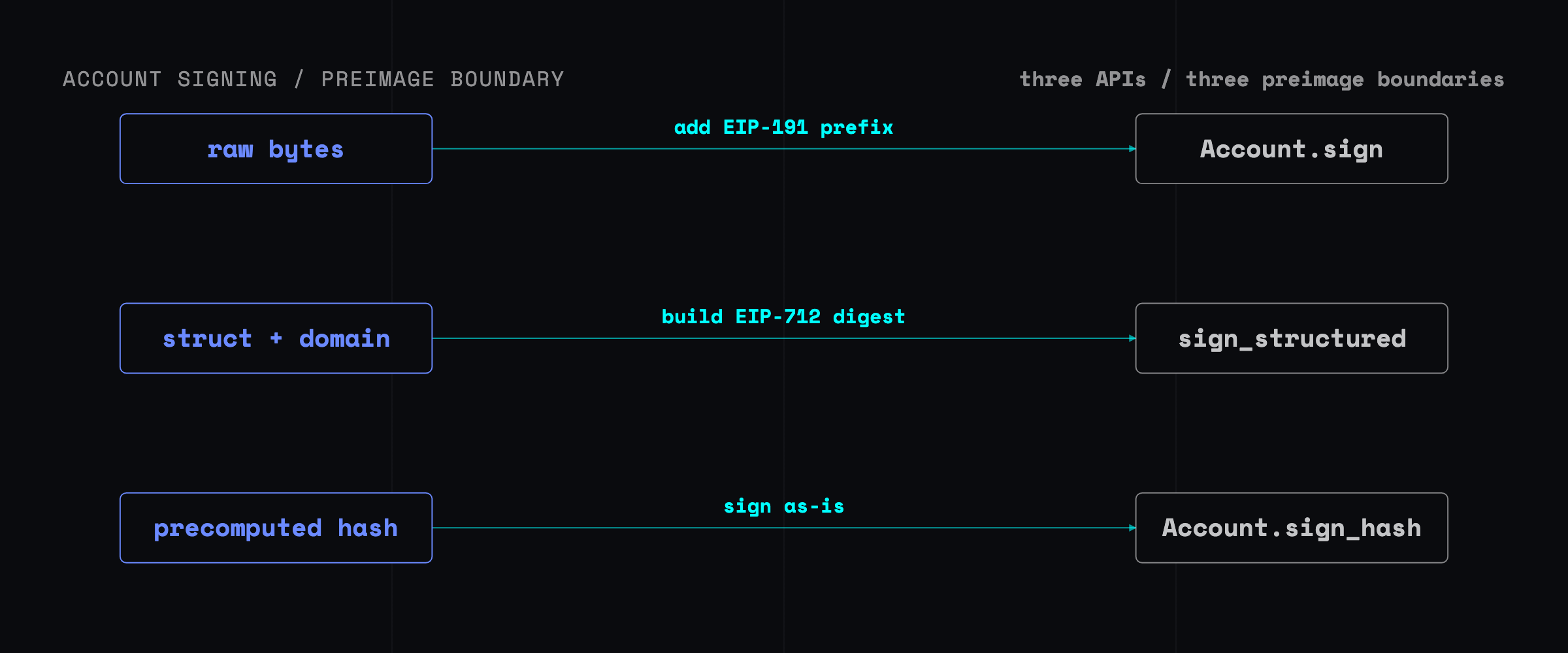
Learn how to sign raw, structured, and hashed messages in Wake tests. Validate EIP-712, EIP-191, and permit flows with clear examples and reliable verification.