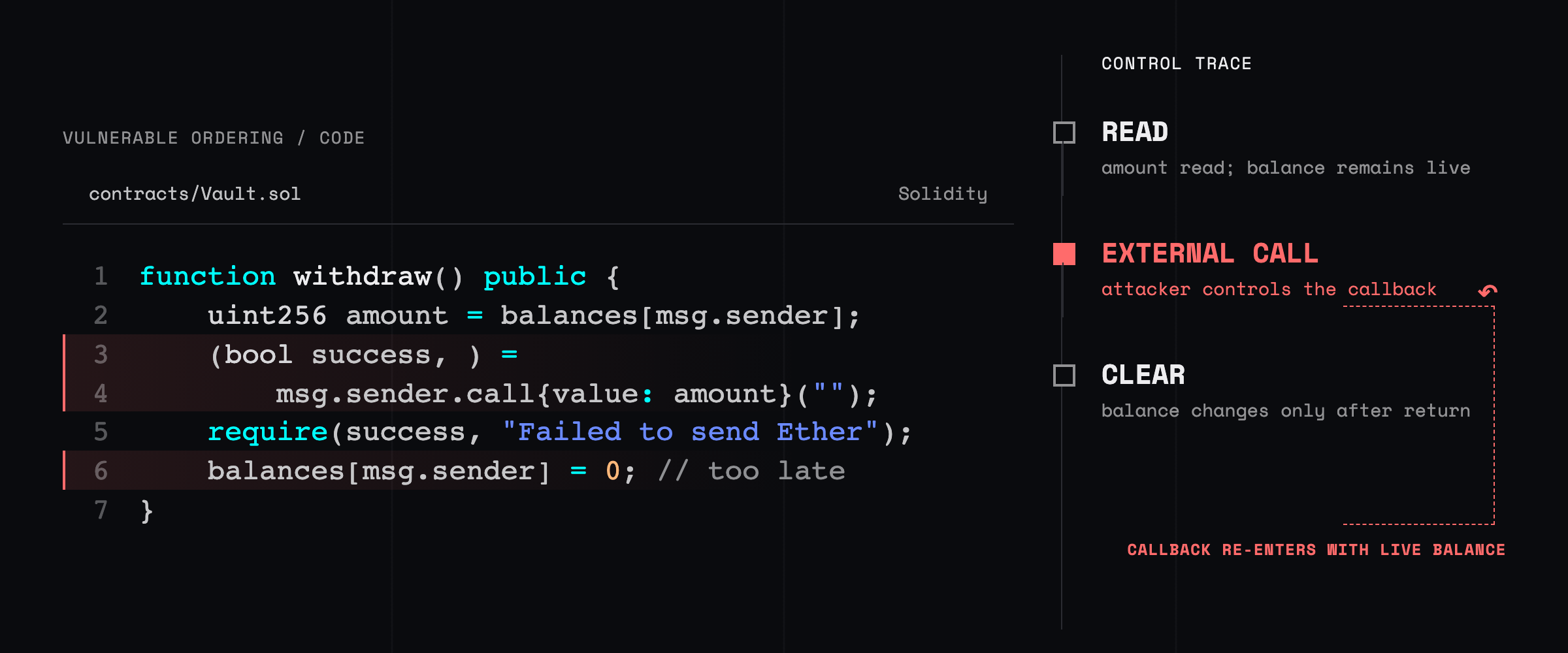
This guide provides a comprehensive analysis of reentrancy vulnerabilities with examples. Learn how reentrancy works and how to identify it in real protocols.
Glossary definition
A flash loan is an uncollateralized onchain loan that must be borrowed and repaid, with fees, inside one atomic transaction or the transaction reverts.
Atomicity removes ordinary credit risk for the lender: if repayment does not happen before execution ends, none of the transaction’s state changes persist. Borrowers use flash liquidity for arbitrage, refinancing, liquidation, and collateral migration.
The primitive is not itself an exploit. It gives any caller temporary scale, which makes manipulable prices, weak governance snapshots, incorrect balance assumptions, and callback bugs easier to monetize in one transaction. Security tests should model the callback and all state visible before repayment. The flash-loan reentrancy article examines one such failure pattern.
Used in context
This guide provides a comprehensive analysis of reentrancy vulnerabilities with examples. Learn how reentrancy works and how to identify it in real protocols.
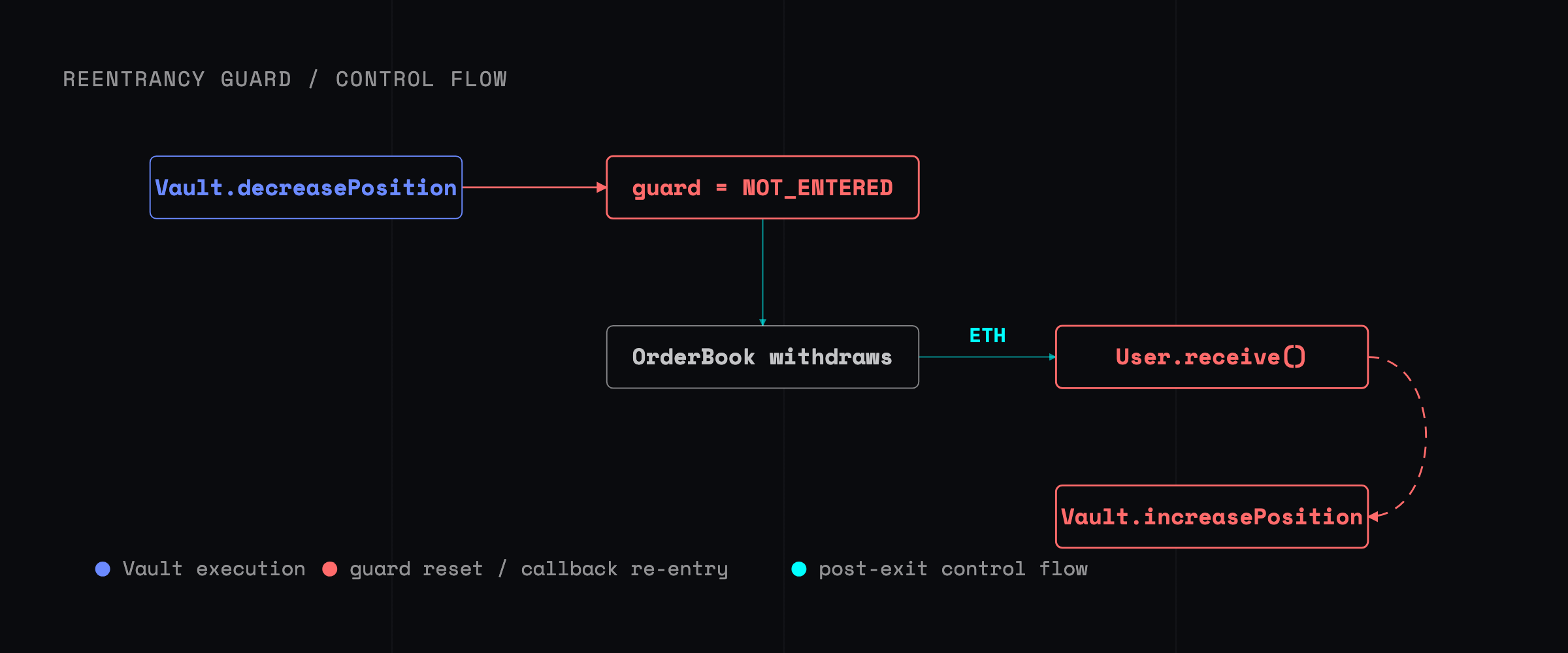
This analysis examines the 42M attack on the GMX protocol. We provide details of the vulnerability with a working reproduction of the attack scenario.
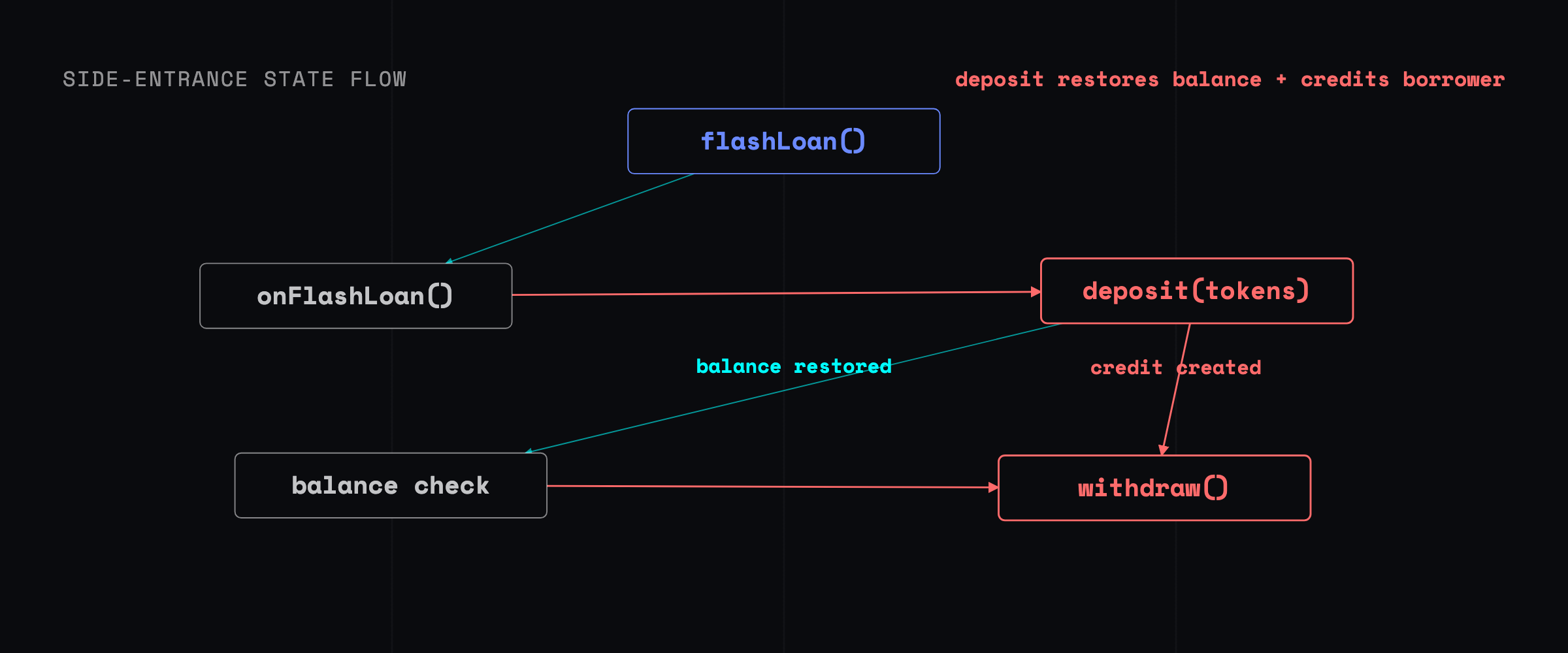
Flash loans enable borrowing without collateral and repaying within a single transaction. While effective, they also introduce security risks – learn more here.
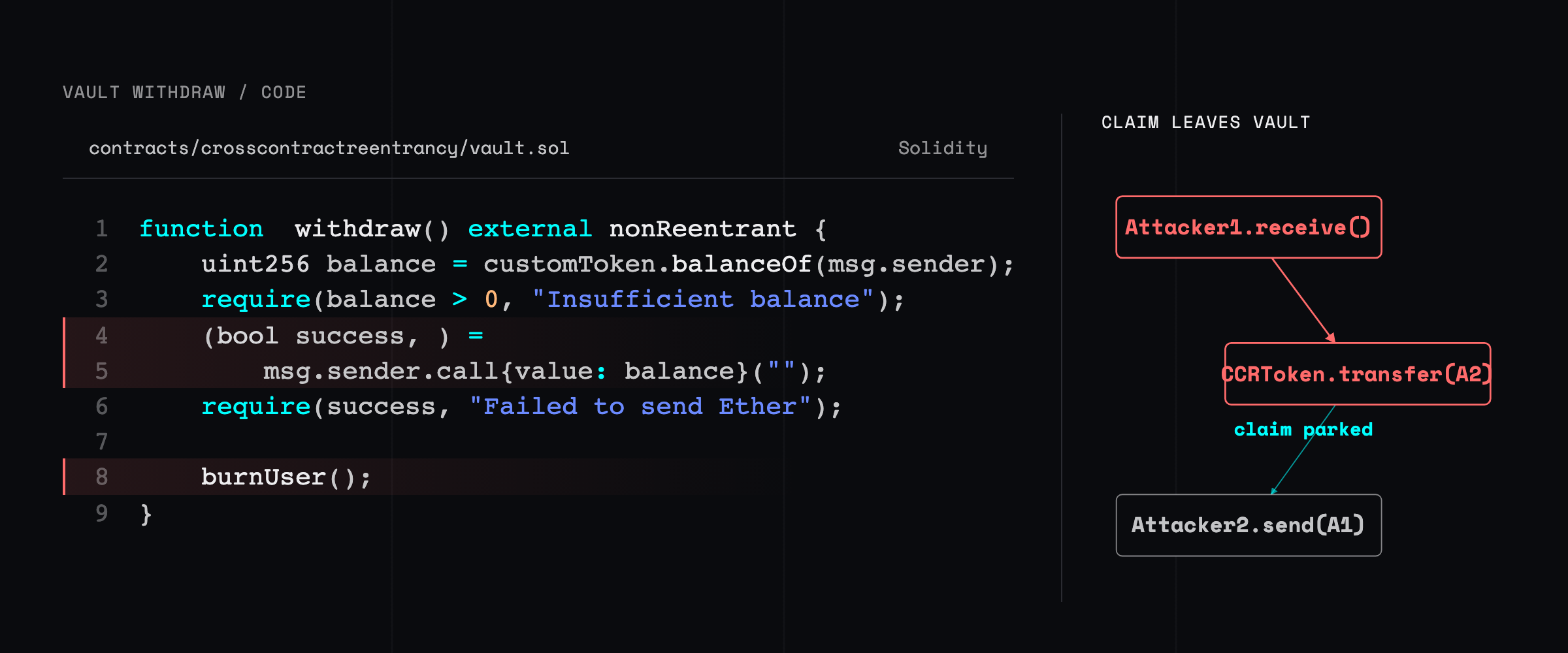
This research article reviews how cross contract reentrancy attacks work, an attack example, and guidance on how to prevent cross contract reentrancy attacks.…